
How Professional Zoom Interpretation Services Work
A global nonprofit organization is preparing for its annual board meeting. Trustees from twelve different countries are joining virtually to discuss strategic planning, financial approvals, and leadership updates. The Zoom links have been tested, the agenda finalized, and attendees confirmed. Yet just days before the meeting, the team realizes they haven’t arranged interpretation support for multilingual participants.
Fortunately, the issue is resolved in time. Still, the last-minute scramble highlights a challenge many organizations encounter when planning international virtual meetings. Communication across languages is often treated as a secondary detail rather than a central part of the meeting experience.
As businesses, nonprofits, healthcare organizations, and educational institutions continue operating globally, the need for reliable Zoom interpretation services continues to grow. Effective multilingual communication is no longer limited to large international conferences. It has become an everyday necessity for organizations working across borders, cultures, and languages.
When professional interpretation is integrated thoughtfully into virtual meetings, participants can fully engage in discussions, contribute confidently, and understand information in real time. That’s the value of investing in professional language solutions designed specifically for multilingual communication.
Why Zoom Has Become a Global Communication Platform
Over the last several years, Zoom has become one of the most widely used platforms for virtual collaboration. Organizations across industries rely on it for meetings, training sessions, conferences, telehealth appointments, and international business discussions.
Part of Zoom’s appeal is its accessibility. Teams can connect quickly regardless of location, making it easier to collaborate with employees, clients, and stakeholders around the world. As global communication becomes more common, multilingual meetings naturally follow.
This shift has also increased demand for remote interpretation services that integrate smoothly into virtual environments. Instead of requiring expensive in-person setups, organizations can now provide real-time interpretation directly through online platforms.
For many businesses and institutions, Zoom is no longer simply a meeting tool. It has become a central communication environment where important decisions, negotiations, and collaborations take place daily.
What Zoom Interpretation Services Actually Include
One common misconception is that Zoom automatically provides interpreters as part of its interpretation feature. In reality, Zoom provides the technical framework that allows interpretation to happen, while the interpreters themselves are sourced separately through professional providers.
When the language interpretation feature is enabled on eligible Zoom accounts, the platform creates dedicated audio channels for different languages. Participants can select their preferred language during the meeting and listen to real-time interpretation without disrupting the speaker.
This setup creates a much smoother experience for multilingual audiences. Instead of stopping repeatedly for translation, meetings can continue naturally while interpretation happens simultaneously in the background.
The quality of the meeting, however, depends heavily on the interpreters involved. While Zoom supplies the technology, professional interpretation services ensure communication remains accurate, culturally appropriate, and easy to follow.
Understanding Simultaneous Interpretation in Virtual Meetings
Most multilingual Zoom events rely on simultaneous interpretation, where interpreters translate speech almost instantly while the speaker continues talking. Participants hear the interpretation in their chosen language channel with only a slight delay.
This approach helps preserve the natural flow of meetings and is especially valuable for conferences, executive presentations, and international discussions where interruptions would slow communication significantly.
At the same time, simultaneous interpretation requires a high level of concentration and expertise. Interpreters must listen, process meaning, and deliver accurate translations in real time. Because of this mental demand, professional events typically use teams of interpreters who rotate throughout the session.
Organizations sometimes underestimate the level of preparation required for multilingual meetings. Planning ahead with experienced providers helps ensure interpreters are properly assigned based on meeting length, language combinations, and subject matter.
By approaching interpretation as an essential part of communication strategy rather than a last-minute addition, organizations create a more inclusive and professional experience for everyone involved.
Setting Up Zoom for Professional Interpretation
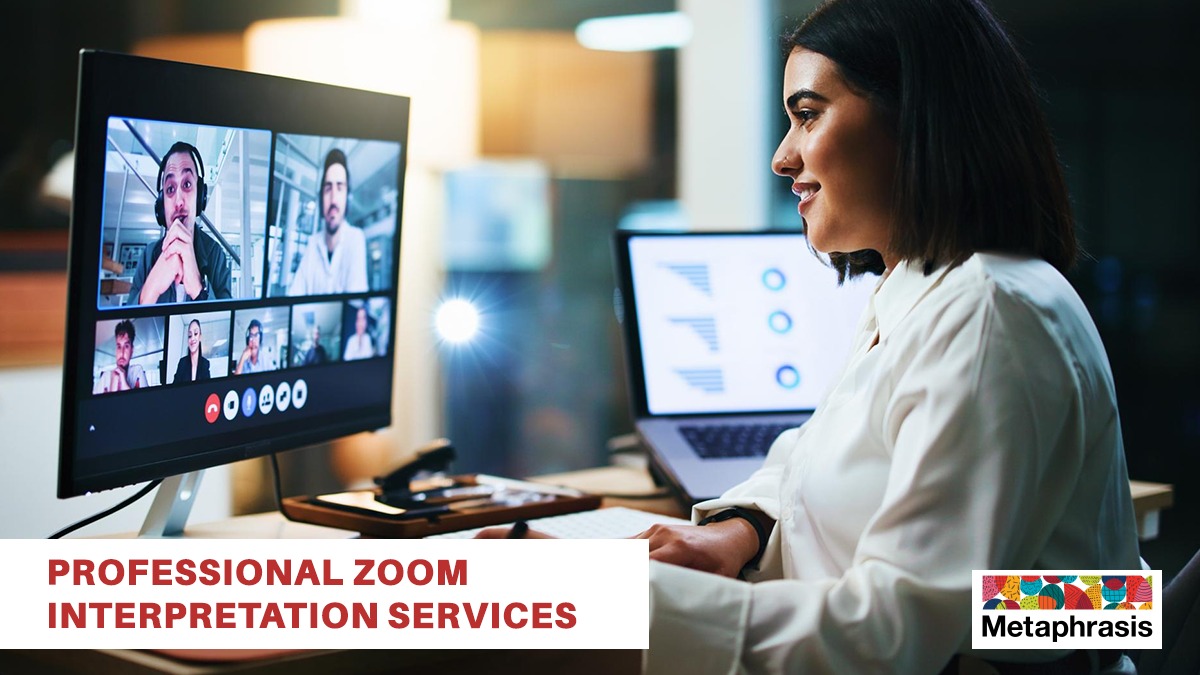
Creating a smooth multilingual meeting experience involves both technical preparation and communication planning. Fortunately, Zoom’s interpretation features are relatively straightforward once configured correctly.
The language interpretation option must first be enabled within the Zoom account settings. During meeting scheduling, hosts can assign interpreters to their respective language channels in advance. This allows participants to easily select their preferred language once the meeting begins.
A few simple practices can improve the experience significantly:
- Start meetings early to test interpreter audio and connectivity
- Use the Zoom desktop application for full interpretation functionality
- Share meeting materials with interpreters beforehand
- Avoid using personal meeting IDs for large interpreted sessions
- Confirm interpreter email addresses match scheduled access
These small details help reduce technical disruptions and allow interpreters to focus entirely on communication quality during the event.
Industries That Depend on Zoom Interpretation Services
Healthcare and Telehealth
Healthcare organizations increasingly rely on video remote interpreting for telehealth appointments, patient consultations, and multilingual administrative meetings. In medical settings, accurate communication is essential not only for patient understanding but also for compliance and quality of care.
Professional interpreters working in healthcare environments are trained to handle medical terminology, confidentiality requirements, and culturally sensitive communication. This helps patients feel more supported while allowing providers to communicate clearly and confidently.
Legal and Government Settings
Virtual legal proceedings, hearings, and consultations often require specialized interpretation support. In these environments, accuracy and clarity are especially important because misunderstandings can affect outcomes and procedural fairness.
Experienced legal interpreters understand courtroom terminology, legal processes, and ethical standards. Their role extends beyond language conversion—they help ensure communication remains precise and accessible for all parties involved.
International Business and Corporate Meetings
Global businesses frequently use Zoom interpretation services for investor presentations, board meetings, employee training, and multinational conferences. In these situations, interpretation helps participants engage fully regardless of their primary language.
Clear communication strengthens collaboration, improves understanding, and supports more productive discussions. For organizations expanding internationally, investing in professional language solutions can also enhance relationships with clients, partners, and employees across regions.
Education and Training Programs
Educational institutions and corporate training teams increasingly deliver multilingual learning experiences online. Whether hosting international seminars or onboarding multilingual employees, interpretation services help ensure information is accessible and engaging for diverse audiences.
By removing language barriers, organizations create more inclusive learning environments where participants can focus on understanding content rather than struggling to follow the language.
Why Human Interpreters Still Matter in Virtual Communication
Technology continues to improve the accessibility of multilingual communication, but human expertise remains essential. Automated translation tools may assist with basic communication, yet they often struggle with nuance, tone, industry terminology, and cultural context.
Professional interpreters bring more than language skills to a meeting. They understand pacing, emotion, intent, and audience expectations. This becomes especially important during sensitive discussions, negotiations, or high-stakes presentations.
Human interpreters can also adapt in real time when speakers change direction, use technical terminology, or reference cultural concepts. Their ability to manage these complexities helps conversations remain natural and accurate.
As virtual collaboration grows, many organizations are recognizing that technology works best when paired with experienced professionals who understand communication on a deeper level.
How Professional Interpretation Improves Meeting Experiences
Multilingual meetings are about more than simply translating words. They’re about making participants feel included, informed, and able to contribute meaningfully.
When interpretation is handled professionally, attendees can focus on the discussion itself instead of struggling to keep up. This improves participation, reduces misunderstandings, and creates a more collaborative environment.
For organizations hosting international meetings regularly, reliable remote interpretation services also help strengthen brand reputation. Clear communication demonstrates professionalism, preparation, and respect for diverse audiences.
By integrating interpretation into meeting planning from the beginning, organizations create experiences that feel seamless rather than reactive.
Supporting Global Communication with Metaphrasis
At Metaphrasis, multilingual communication is approached with both technical precision and human understanding. The team provides experienced interpreters across healthcare, legal, corporate, and conference settings, helping organizations manage multilingual Zoom meetings with confidence.
From platform setup and interpreter coordination to real-time session support, every aspect of the process is designed to create smoother communication experiences for participants worldwide.
Whether your organization needs interpretation for a single virtual event or ongoing multilingual support, investing in professional expertise helps ensure every participant feels heard and included.
FAQs – Zoom Interpretation Services
- What are Zoom interpretation services?
Zoom interpretation services allow multilingual participants to listen to real-time interpretation through dedicated language channels during virtual meetings and conferences.
- What is simultaneous interpretation?
Simultaneous interpretation is a method where interpreters translate speech in real time while the speaker continues talking, allowing meetings to flow naturally without pauses.
- How is video remote interpreting different from phone interpretation?
Video remote interpreting uses video conferencing platforms like Zoom to provide visual and verbal communication, while phone interpretation is audio-only.
- Why are professional interpretation services important for virtual meetings?
Professional interpretation services help ensure accurate communication, cultural understanding, and smoother collaboration during multilingual meetings and events.
- Can Zoom provide interpreters directly?
No, Zoom provides the technical interpretation feature, but organizations typically work with providers like Metaphrasis to arrange professional interpreters for meetings.