
Why Language Access Matters in Healthcare and Public Safety
As we move through 2026, one thing is becoming increasingly clear: language is no longer just a support service — it is strategic infrastructure. Across healthcare systems, public safety initiatives, and government policy, language access has become central to how communities function, how trust is built, and how lives are protected.
The language industry is evolving beyond technological innovation. While automation and AI tools continue to grow, they cannot replace the nuance, cultural intelligence, and human understanding required in critical environments like hospitals, courtrooms, and public policy spaces. Translation and interpretation services are no longer operational afterthoughts. They are drivers of equity, inclusion, and measurable outcomes.
At Metaphrasis, we see this transformation every day. Language is not just about words. It’s about access. It’s about safety. And in many cases, it’s about survival.
The Growing Importance of Language Access Services in 2026
Recent industry reports show that global demand for translation and localization continues to rise steadily. The global translation services market is projected to expand significantly in the coming years, fueled by:
- Expanding international trade
- Rapid digital content growth
- Global collaboration in healthcare, legal, finance, and education sectors
- Increased regulatory focus on accessibility
Organizations now recognize that multilingual communication isn’t optional. It’s essential for growth and compliance. Businesses, healthcare systems, and government agencies are investing in professional language services because clear communication drives better engagement, stronger relationships, and improved outcomes.
At the same time, foreign language education is seeing renewed attention. Despite advances in automated translation tools, human fluency remains invaluable. Why? Because communication is not just transactional — it’s emotional, cultural, and deeply contextual. Machines can translate words, but they struggle to convey empathy, cultural nuance, and persuasion.
Language proficiency today represents workforce readiness, cultural competence, and competitive advantage.
Why Language Access Matters in Public Safety Policy
Public safety depends on clear communication. It’s that simple.
Recent federal discussions surrounding gun violence prevention and other safety measures have highlighted a critical issue: when safety information is available only in English, entire communities may be excluded from understanding their rights, protections, and responsibilities.
Imagine trying to navigate legal protections or access prevention programs in a language you don’t fully understand. Confusion leads to hesitation. Hesitation can lead to harm.
When language barriers exist in public safety communication, the risks include:
- Delayed reporting of incidents
- Misunderstanding of legal rights
- Reduced trust in institutions
- Limited access to prevention resources
- Lower participation in community programs
Language access provisions are increasingly being included in federal legislation. This shift signals a broader understanding: translation and interpretation services are not optional add-ons. They are foundational components of equitable policy implementation.
For government agencies and community organizations, true language access means:
- Professionally translated documents
- Certified interpreters in critical interactions
- Culturally responsive outreach strategies
- Community engagement beyond minimum compliance
At Metaphrasis, we partner with public institutions to ensure policies designed to protect communities are accessible to everyone — not just English speakers.
Public safety begins with understanding.
Heart Health Awareness Month: Communication That Saves Lives
February also marks Heart Health Awareness Month — a powerful reminder that accessible healthcare communication can literally save lives.
In healthcare, misunderstanding is dangerous.
Patients must fully understand:
- Diagnoses
- Treatment options
- Medication instructions
- Preventative care guidelines
- Follow-up appointments
When communication barriers exist, the consequences can be serious:
- Misinterpreted symptoms
- Improper medication usage
- Missed appointments
- Delayed treatments
- Increased emergency visits
Language access in healthcare ensures patients can ask questions, voice concerns, and make informed decisions about their care. It empowers families to advocate for loved ones and enables providers to deliver compassionate, equitable treatment.
Clear communication builds trust between providers and patients. Trust improves adherence to treatment plans. Improved adherence leads to better health outcomes.
Language access services are not just about translation — they are about patient safety.
This Heart Health Awareness Month, healthcare organizations have an opportunity to strengthen their commitment to equity. Ensuring professional interpretation and accurate medical translation services is not simply regulatory compliance. It’s ethical responsibility.
When patients truly understand their care, they are better equipped to protect their heart health — and their overall well-being.
Language, Equity, and Black History Month
February is also a time to celebrate Black History Month — honoring the culture, achievements, and lasting contributions of Black leaders, innovators, and communities who have shaped society in profound ways.
From advancements in medicine and education to movements for civil rights and social justice, Black voices have driven progress and inspired change. But honoring Black history is not just about recognition. It’s about reflection and action.
Equity requires access.
Language plays a powerful role in empowerment. When individuals can communicate in their preferred language, they can:
- Advocate for themselves
- Access healthcare and public services
- Participate fully in civic life
- Pursue education and professional opportunities
- Strengthen their communities
Ensuring language access supports broader goals of representation, inclusion, and fairness. It helps dismantle barriers that disproportionately affect historically marginalized communities.
At Metaphrasis, advancing language access is part of advancing equity. Every translated document, every interpreted conversation, every culturally responsive outreach effort contributes to building a more inclusive society.
Black History Month reminds us that inclusion is not symbolic. It must be structural. Language access is one of those structures.
Investing in Multilingual Education and Workforce Readiness
Beyond healthcare and public safety, the global language ecosystem continues to expand.
There is growing investment in:
- Dual-language immersion programs
- Multilingual literacy initiatives
- Professional language training
- Continuing education for interpreters
These efforts reflect a broader recognition that multilingual fluency strengthens economies and communities. Language skills open doors across business, diplomacy, research, and global markets.
For interpreters and translators, continuing education ensures:
- Ethical practice
- Cultural competence
- Updated legal and medical terminology
- High-quality service delivery
Professional development is critical because language work is high-impact work. In healthcare and public safety settings especially, accuracy matters.
The language industry is not simply adapting to change — it is shaping global communication standards.
Building Inclusive Global Bridges
In 2026, language is not just about translation. It is about connection.
It enables:
- Inclusive policymaking
- Equitable healthcare delivery
- Community engagement
- Cross-cultural collaboration
- Global business strategy
Organizations that prioritize language access demonstrate leadership. They show communities that inclusion is not a slogan — it’s a commitment.
At Metaphrasis, we are proud to be part of this transformative journey. Our work brings together linguistic expertise and cultural insight to ensure every voice is heard clearly and respectfully.
Because when people understand — they engage.
When they engage — they trust.
And when trust exists — communities thrive.
Language access is not a luxury.
It is infrastructure for safety, health, and equity.
Heart Health Awareness Month: Communication That Saves Lives
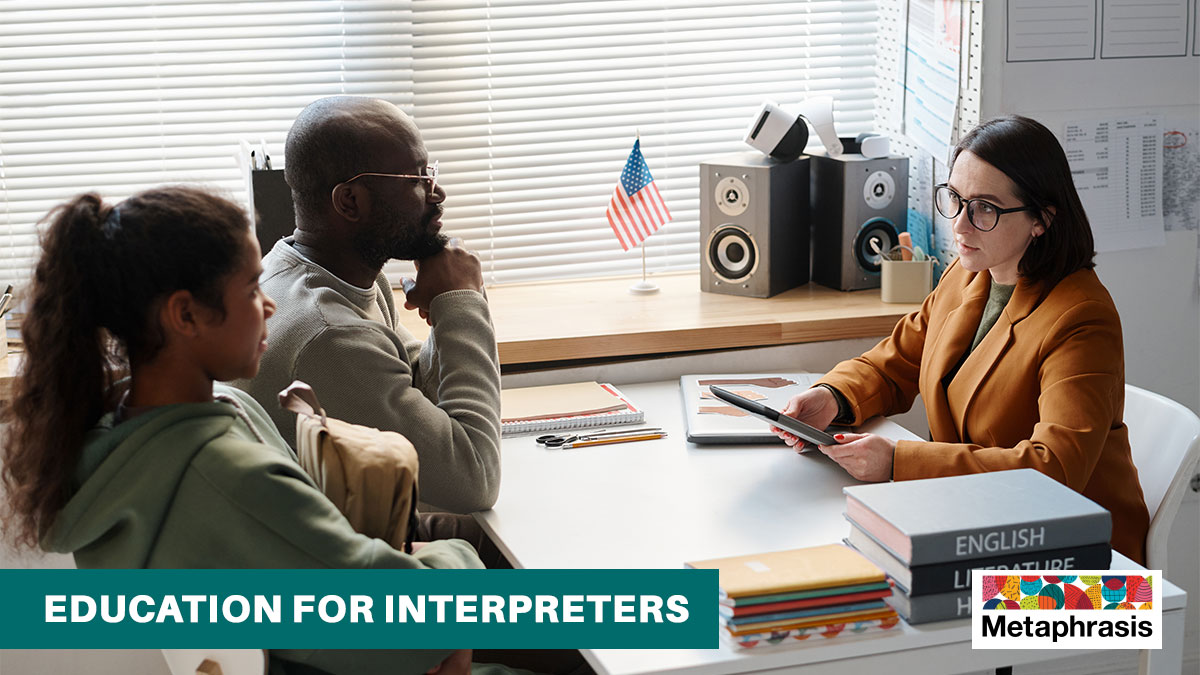
The Importance of Continued Education for Interpreters
As language access becomes more central to healthcare systems, public safety policy, and global communication strategy, the role of the professional interpreter continues to evolve. Interpretation is not static. Terminology changes. Laws shift. Medical protocols advance. Cultural dynamics evolve. Without continued education, even experienced professionals risk falling behind.
In high-stakes environments like hospitals, courtrooms, government agencies, and educational institutions, precision is everything. A single misunderstood term can alter a diagnosis, affect a legal outcome, or influence a family’s ability to access critical services. That’s why ongoing professional development is not optional — it is essential.
Continued education helps interpreters:
- Stay current with evolving medical and legal terminology
- Strengthen ethical decision-making skills
- Deepen cultural competence and contextual awareness
- Improve accuracy under pressure
- Maintain compliance with industry standards
- Build specialized expertise in niche subject areas
As artificial intelligence tools become more integrated into language workflows, human interpreters must sharpen the skills that technology cannot replicate: judgment, empathy, cultural nuance, and real-time critical thinking. Professional training ensures interpreters remain indispensable in complex, emotionally sensitive, and legally significant interactions.
The industry’s commitment to growth is reflected in major professional gatherings like the American Translators Association (ATA) 67th Annual Conference, taking place October 28–31, 2026, in San Francisco, California. This fully in-person conference invites session proposals from professionals across the field and seeks advanced, specialized, relevant, and original content that equips attendees with a competitive edge in their careers — especially in an era increasingly shaped by AI and automation.
Events like ATA67 reinforce an important message: excellence in language services requires lifelong learning.
For interpreters working in healthcare and public safety, ongoing training strengthens professionalism, decision-making, and reliability ensuring that language access remains accurate, respectful, and effective for every community served.
Frequently Asked Questions (FAQs)
1. What is language access in healthcare and public safety?
Language access refers to providing professional interpretation and translation services to individuals with limited English proficiency (LEP) so they can fully understand healthcare information, legal rights, emergency instructions, and public safety policies. In hospitals, clinics, law enforcement agencies, and government offices, language access ensures that critical information is communicated clearly and accurately, reducing misunderstandings and improving outcomes. It includes in-person interpreters, over-the-phone interpretation, video remote interpreting (VRI), and professionally translated documents.
2. Why is language access important in healthcare settings?
Language access in healthcare is essential because clear communication directly impacts patient safety. When patients fully understand their diagnosis, treatment plan, medications, and follow-up instructions, they are more likely to follow medical guidance and avoid complications. Without professional interpretation, misunderstandings can lead to medication errors, missed appointments, delayed treatment, or improper care. Language access supports equitable healthcare, improves patient satisfaction, and helps providers deliver culturally competent treatment.
3. How does language access improve public safety?
Language access strengthens public safety by ensuring that all community members understand their rights, responsibilities, and available resources. In emergency situations, disaster preparedness efforts, violence prevention programs, and legal proceedings, clear multilingual communication prevents confusion and builds trust between institutions and communities. When residents can access safety information in their preferred language, they are more likely to report incidents, seek assistance, and participate in prevention initiatives.
4. Are healthcare providers legally required to provide interpreters?
Yes. Under federal laws such as Title VI of the Civil Rights Act and Section 1557 of the Affordable Care Act, healthcare providers that receive federal funding must provide meaningful access to individuals with limited English proficiency. This typically includes offering qualified interpreters and translated materials at no cost to the patient. Compliance is not only a legal requirement but also a critical component of ethical and patient-centered care.
5. What is the difference between translation and interpretation?
Translation refers to converting written text from one language to another, such as medical forms, discharge instructions, or public safety notices. Interpretation involves orally conveying spoken communication between two or more parties in real time, such as during a doctor’s appointment or court hearing. Both services are essential for effective language access, especially in healthcare and public safety environments.
6. Why is continued education important for interpreters?
Continued education ensures interpreters stay current with evolving terminology, industry regulations, ethical standards, and cultural considerations. In high-stakes settings like healthcare and legal environments, accuracy and professionalism are critical. Ongoing training helps interpreters strengthen decision-making skills, maintain certification requirements, and adapt to emerging technologies such as AI-assisted language tools. Professional development protects the integrity and reliability of language services.
7. How does language access promote equity and inclusion?
Language access removes communication barriers that disproportionately affect immigrant and multilingual communities. By providing professional interpretation and translation, organizations ensure that individuals can advocate for themselves, access essential services, and participate fully in society. This promotes fairness, builds institutional trust, and supports inclusive public policy and healthcare delivery systems.
8. How can organizations implement effective language access services?
Organizations can implement effective language access by conducting language needs assessments, partnering with certified interpreters, translating vital documents, training staff on cultural competence, and developing formal language access policies. Leveraging both in-person and remote interpretation solutions ensures accessibility across diverse communities. Working with professional language service providers helps maintain compliance, accuracy, and quality standards.