
Medical Interpreting: How Professional Language Services Improve Healthcare Communication
Your doctor just explained your diagnosis. You nodded. You smiled politely.
But what if English isn’t your first language? Maybe you’re a recent immigrant, still adjusting to a new healthcare system and cultural expectations. You caught parts of what the doctor said—but not everything.
In everyday situations, misunderstandings can be frustrating. In healthcare, they can be serious. Clear communication in medical settings isn’t just helpful—it’s essential for patient safety, trust, and quality care.
Why Professional Interpreters Are Essential in Healthcare Today
Every day, millions of conversations take place in hospitals, clinics, and medical offices. These discussions involve diagnoses, medications, treatment plans, and follow-up care. When patients and providers do not share the same language, important details can be misunderstood or overlooked.
Professional medical interpreting services help ensure that patients fully understand their health information—and that providers receive accurate, complete information in return.
The impact of not having qualified language support is significant. Miscommunication can lead to:
- Missed appointments
- Medication errors
- Delayed treatment
- Reduced patient satisfaction
- Poorer health outcomes
Language access is not simply a convenience. It is a critical component of safe, equitable healthcare delivery.
Language Barriers in Healthcare Require Professional Solutions
Even native English speakers sometimes struggle with medical terminology. Healthcare language can be technical, complex, and overwhelming.
Now imagine navigating that same complexity in a second language.
Patients with Limited English Proficiency (LEP) often face additional challenges when seeking care. Without professional language support, they may hesitate to ask questions, misunderstand instructions, or feel disconnected from their care team.
Professional medical interpretation and translation services remove these barriers. They help patients participate confidently in their care and empower providers to deliver accurate, informed treatment.
How Medical Interpretation and Translation Services Bridge Communication Gaps
Professional language services connect trained medical interpreters with patients and healthcare providers in real time.
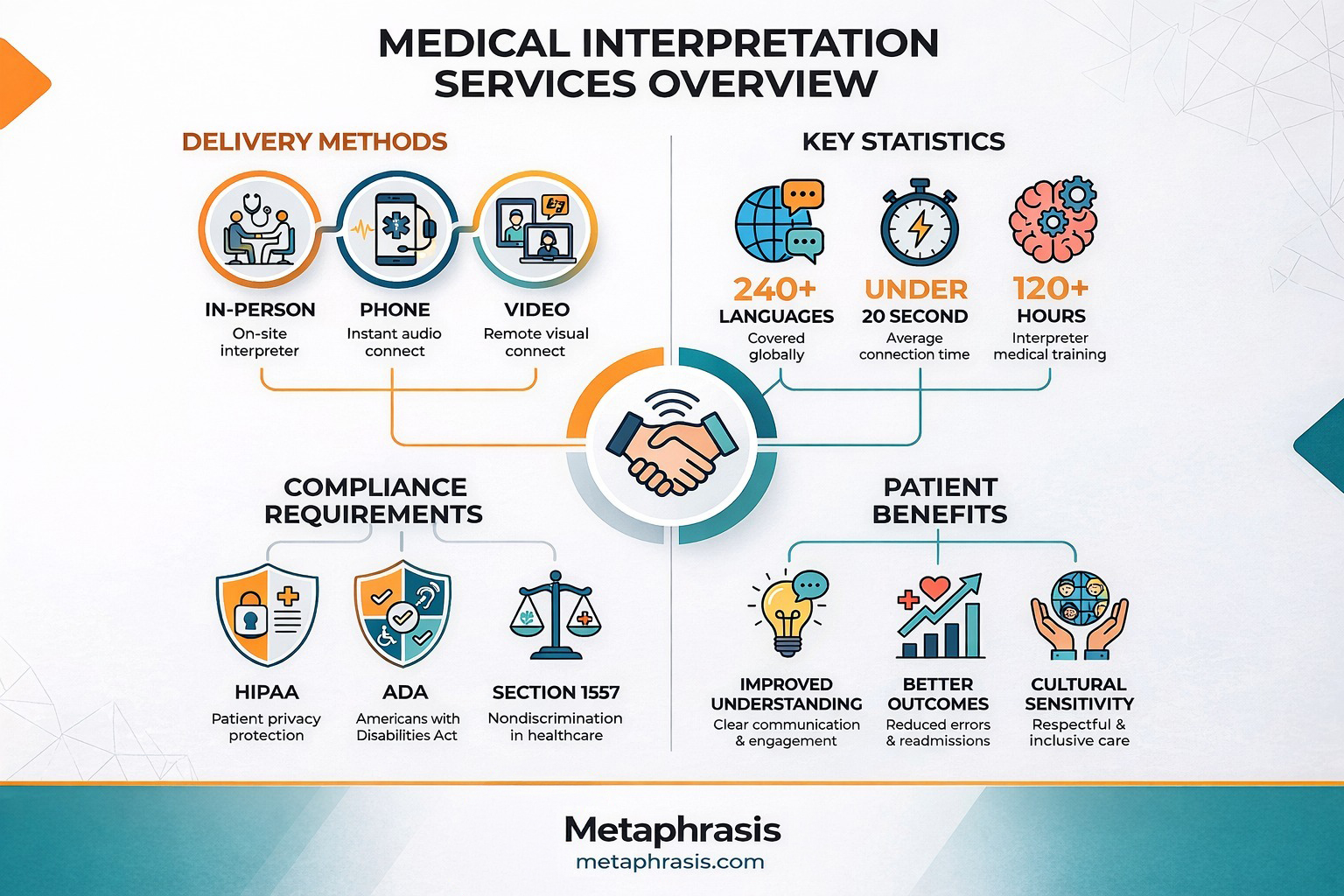
Depending on the situation, services may be delivered:
- In person
- Over the phone
- Through video remote interpretation (VRI)
In addition, medical document translation services ensure written materials—such as discharge instructions, consent forms, and patient education materials—are available in patients’ preferred languages.
Modern healthcare translation services also integrate with:
- Electronic Health Records (EHR)
- Telehealth platforms
- Patient portals
Importantly, professional providers maintain HIPAA compliance and patient confidentiality at all times.
The result? Clearer communication, greater trust, and improved health outcomes.
Trusted providers such as Metaphrasis specialize in delivering qualified medical interpreters and culturally responsive language solutions that integrate seamlessly into modern healthcare systems.

What Does LEP Mean in Healthcare?
LEP stands for Limited English Proficiency. It refers to individuals who do not speak English as their primary language and may have difficulty understanding or communicating effectively in healthcare settings.
Approximately 25.7 million people in the United States have limited English proficiency. For these patients, language access services are essential—not optional.
Without appropriate support, LEP patients may face significant obstacles in accessing and navigating healthcare systems.
The Often Overlooked Healthcare Access Challenge
Research consistently shows that adults with limited English proficiency are more likely to:
- Miss preventive screenings
- Delay medical appointments
- Experience difficulty following medication instructions
- Report lower satisfaction with care
These outcomes are rarely due to inadequate medical expertise. More often, they stem from communication gaps.
When patients cannot fully understand their diagnosis or treatment plan, their ability to make informed decisions is limited. Professional medical interpreters help ensure that every patient receives meaningful access to care.
Medical Interpretation Services That Enhance Patient Care
When a qualified medical interpreter joins a clinical interaction, communication becomes clearer and more collaborative.
Patients can:
- Ask questions comfortably
- Express concerns openly
- Understand treatment options
- Participate in shared decision-making
Providers benefit as well. Accurate interpretation allows clinicians to gather complete patient histories and explain complex information effectively.
Ultimately, professional interpretation strengthens the provider–patient relationship.
In-Person Interpretation for Sensitive or Complex Situations
Some healthcare conversations require additional nuance and personal connection.
In-person medical interpreters are especially valuable during:
- Serious diagnoses
- Surgical consultations
- Mental health evaluations
- End-of-life discussions
Being physically present allows interpreters to observe non-verbal cues, manage multi-person conversations, and help ensure everyone involved clearly understands the discussion.
This level of support can make difficult conversations more manageable and compassionate.
Over-the-Phone Interpretation When Immediate Support Is Needed
Healthcare settings often require immediate language assistance.
Over-the-phone interpretation (OPI) connects providers to professional interpreters within minutes. This option is particularly useful in:
- Emergency departments
- Urgent care settings
- Follow-up phone calls
- Quick clinical consultations
With access to a wide range of languages on demand, phone interpretation ensures timely communication without scheduling delays.
Video Remote Interpretation for Visual Communication Needs
Video Remote Interpretation (VRI) combines the immediacy of phone services with the visual element of in-person interpretation.
This format is especially important for:
- Deaf and hard-of-hearing patients using American Sign Language (ASL)
- Situations where facial expressions and body language matter
- Telehealth appointments
As virtual healthcare continues to expand, video interpretation plays a vital role in maintaining inclusive and accessible communication.
The Importance of Medical Translation for Written Materials
While interpretation focuses on spoken communication, medical translation ensures that written documents are accessible and understandable.
Key documents that require professional translation include:
- Discharge instructions
- Consent forms
- Medication guides
- Patient education brochures
- Insurance documents
- Medical records
Accurate translation goes beyond literal word conversion. It ensures clarity, cultural appropriateness, and legal compliance—helping patients confidently follow medical guidance.
Organizations like Metaphrasis ensure that translated healthcare materials are not only linguistically accurate but also culturally appropriate, legally compliant, and aligned with healthcare industry standards.
Why Family Members Should Not Replace Professional Interpreters
It may seem convenient to rely on a bilingual family member or friend for interpretation. However, this approach can create unintended risks.
-
Medical Terminology Expertise
Fluency in two languages does not automatically include knowledge of complex medical terminology. Professional interpreters receive extensive training in medical vocabulary, healthcare systems, and ethical standards.
-
Confidentiality and Ethics
Professional interpreters are trained in confidentiality and HIPAA compliance. Family members may unintentionally omit, alter, or filter information—especially when discussing sensitive topics.
-
Emotional Impact
Serious medical discussions can be emotionally challenging. Asking a loved one—especially a child—to interpret during a difficult diagnosis can place unnecessary emotional strain on both parties.
Professional interpreters provide neutral, accurate communication while allowing family members to focus on emotional support.
Cultural Competence: More Than Just Language
Effective healthcare communication involves more than translating words. Cultural perspectives influence how individuals understand:
- Illness and treatment
- Mental health
- Pain management
- Preventive care
- Family involvement in decision-making
Qualified medical interpreters receive cultural competency training. They help bridge not only language differences but also cultural nuances that may affect communication.
This cultural awareness contributes to more respectful, patient-centered care.
Legal Responsibilities for Healthcare Providers
Federal regulations require healthcare organizations to provide meaningful language access.
Key regulations include:
- Title VI of the Civil Rights Act of 1964
- Section 1557 of the Affordable Care Act
- The Americans with Disabilities Act (ADA)
Healthcare providers receiving federal funding must:
- Offer qualified interpreters at no cost to patients
- Provide translated materials when necessary
- Document language preferences
Compliance supports equitable care while reducing legal risk.
Building a Comprehensive Language Access Strategy
Effective language access begins at the first point of contact.
Healthcare organizations should consider:
- Documenting language preferences during registration
- Training staff to request interpreters efficiently
- Ensuring access across all departments
- Aligning translated materials with available interpretation services
Language support should extend throughout the patient journey—from appointment scheduling to follow-up care.
Partnering with experienced medical translation agencies can help healthcare organizations develop sustainable, compliant programs tailored to diverse communities.
Partnering with experienced medical language service providers such as Metaphrasis can help healthcare organizations design sustainable, compliant language access programs tailored to diverse patient communities.
Transforming Healthcare Through Clear Communication
Healthcare depends on understanding.
A diagnosis requires accurate patient history. Treatment depends on informed consent. Recovery relies on clear instructions.
When communication is clear, patients feel confident and respected. Providers deliver safer, more effective care. Trust grows stronger.
Professional medical interpretation and translation services make this possible—ensuring every patient has access to quality healthcare, regardless of language.
At Metaphrasis, we are committed to supporting healthcare providers with professional medical interpreting and translation services that prioritize accuracy, empathy, and patient safety. Our goal is simple: to help healthcare teams communicate clearly and confidently with every patient they serve.
Frequently Asked Questions (FAQs)
- What is medical interpreting?
Medical interpreting is a specialized service where trained professionals facilitate communication between healthcare providers and patients who speak different languages. Interpreters accurately convey spoken information while maintaining confidentiality and neutrality.
- When should a healthcare provider use a professional interpreter?
Providers should use professional interpreters whenever a patient has limited English proficiency or requests language assistance. This includes consultations, diagnoses, consent discussions, discharge instructions, and follow-up communications.
- Are healthcare organizations legally required to provide interpreters?
Yes. Under federal laws such as Title VI of the Civil Rights Act and Section 1557 of the Affordable Care Act, healthcare providers receiving federal funding must offer meaningful language access at no cost to patients.
- What is the difference between medical translation and medical interpretation?
Medical interpretation refers to spoken language conversion during live interactions. Medical translation involves converting written documents—such as consent forms or discharge instructions—into another language accurately and clearly.
- Why can’t family members act as medical interpreters?
While family members may be bilingual, they typically lack training in medical terminology, confidentiality standards, and ethical guidelines. Professional interpreters ensure accurate, unbiased communication and protect patient privacy.