
How Language Access Builds Trust in Healthcare, Education, and Public Services
As we enter a new year, conversations about growth, connection, and purpose naturally rise to the surface. Across healthcare systems, schools, government agencies, and community organizations, one foundational element continues to shape trust and participation language access.
Language is not simply a tool for exchanging information. It carries culture, identity, and meaning. When people are able to communicate in a language they understand, they feel seen, respected, and valued. When they cannot, even the most well-intentioned systems can unintentionally create distance, confusion, or harm.
At Metaphrasis, this understanding guides our work every day. Language access is not an added service it is an essential bridge that allows individuals and communities to fully participate in the spaces that serve them.
Language as a Connector, Not a Barrier
The start of a new year often brings reflection. During a recent New Year’s celebration in Puerto Rico, people from around the world gathered together, speaking different languages yet sharing the same moments of joy, music, and tradition. Conversations flowed in Spanish, English, and many other languages, and while not everyone understood every word, the sense of connection was unmistakable.
This experience highlights a powerful truth: language is deeply human. It is woven into how we celebrate, learn, heal, and build relationships. When organizations acknowledge this and create inclusive communication environments, trust naturally follows.
Trust grows when individuals feel welcomed—not despite their language, but because their language and culture are respected.
Why Language Access Matters in Healthcare
Healthcare settings are among the most critical spaces where language access plays a role. Clear communication can affect diagnosis, treatment adherence, patient safety, and outcomes.
Yet, recent findings show there is still significant work to be done. A 2025 study on hospital language access revealed that only about 13% of hospitals meet all established language access performance benchmarks.
For patients, these gaps can result in:
- Misunderstanding medical instructions
- Reduced participation in care decisions
- Increased anxiety and distrust
For healthcare organizations, inadequate language access can lead to:
- Patient safety risks
- Compliance concerns
- Erosion of trust within diverse communities
Building language access into everyday workflows not as an afterthought, but as a core function helps healthcare providers create safer, more equitable environments for both patients and staff.
Education and Public Services: Trust Begins with Understanding
In education, language access directly influences a student’s ability to learn, participate, and succeed. Families who cannot fully understand school communications may feel disconnected from their children’s education, even when they want to be involved.
Similarly, public services rely on trust to function effectively. Whether it is accessing legal information, social services, or community programs, individuals need clear and culturally appropriate communication to navigate systems confidently.
When language access is prioritized:
- Families engage more actively
- Communities feel respected
- Services become more effective and equitable
Trust is built not through policies alone, but through everyday interactions that demonstrate care and understanding.
A Growing Industry Reflecting a Growing Need
The global language services industry continues to expand, reflecting rising awareness of multilingual communication needs. Industry analysts estimate the market reached $71.7 billion in 2024, with projections of $75.7 billion in 2025, and continued growth expected throughout the decade.
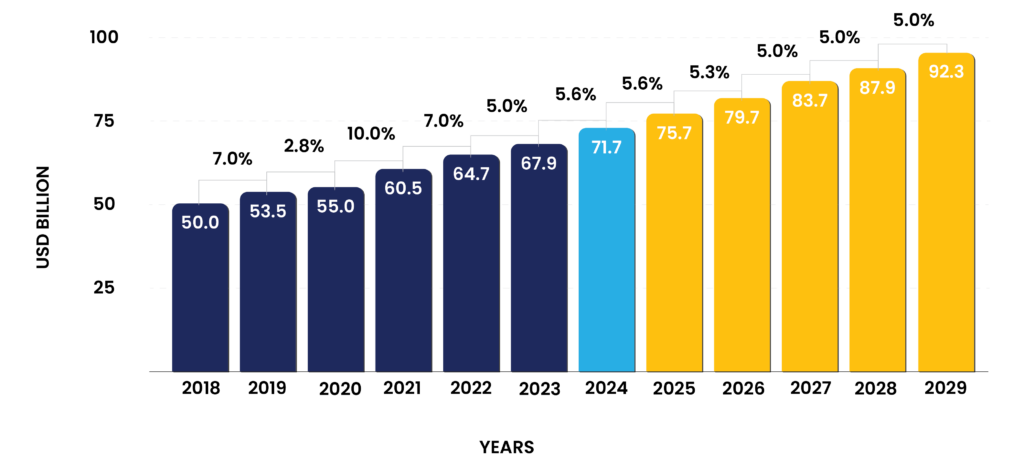
This growth is not just a business trend it is a signal. Organizations across healthcare, education, legal, and public-facing sectors are recognizing that language access is essential to serving increasingly diverse populations.
As organizations plan for 2026 and beyond, the question is no longer whether language access is needed, but how to implement it thoughtfully, consistently, and sustainably.
From Commitment to Practice
Many organizations express a commitment to equity and inclusion. Turning that commitment into action requires practical solutions that align with real-world operations.
Effective language access strategies consider:
- Professional interpretation and translation services
- Culturally relevant communication
- Integration into daily workflows
- Long-term planning rather than reactive fixes
Metaphrasis works with organizations to develop language access solutions that support both operational goals and human connection—ensuring communication is accurate, respectful, and meaningful.
Setting Language Goals for the Year Ahead
As new goals are set each year, language is often overlooked. Yet it plays a defining role in how people experience the systems meant to serve them.
As you plan ahead, consider:
- Who may be unintentionally excluded without language access?
- How does communication shape trust in your organization?
- What would true understanding look like for the communities you serve?
Making language part of strategic planning is not only about compliance or efficiency it is about fostering environments where people feel heard and respected.
Moving Forward Together
Language access builds trust because it acknowledges humanity. It allows people to engage fully, ask questions confidently, and participate meaningfully—whether in a hospital room, a classroom, or a public office.
As we move into a new year, the opportunity is clear: to strengthen communication, honor cultural differences, and create spaces where understanding leads the way.
At Metaphrasis, this remains our mission supporting communication that connects, empowers, and builds lasting trust.
Frequently Asked Questions
- What is language access?
Language access refers to the availability of interpretation, translation, and culturally appropriate communication that allows individuals to understand and engage with services regardless of the language they speak.
- Why is language access important in healthcare?
Clear communication supports patient safety, informed decision-making, compliance, and trust. Without it, misunderstandings can negatively affect outcomes and experiences.
- How does language access impact education?
Language access helps students and families fully participate in learning environments, improving engagement, comprehension, and academic success.
- Is language access only required for compliance?
While compliance is important, language access also strengthens relationships, improves service effectiveness, and supports equity and inclusion goals.
- How can organizations begin improving language access?
Organizations can start by assessing current communication gaps, engaging professional language service providers, and integrating language access into everyday operations and long-term planning.